How many amps is a good jump starter? Learn the recommended car battery jump starter amps for gasoline cars, V6/V8 engines, and diesel trucks, based on real starting requirements.
How Many Amps Should I Get For A Jump Starter?
Each amp rating serves a different usage. Each amp rating serves a different usage. Firstly, peak amps (400–3000A) indicate the maximum burst power—a useful way to compare brands, though it doesn’t reflect real-world continuous performance. For 12V vehicles, typical peak amps range from 400–800A for small cars, 1000–2000A for sedans and SUVs, and 2000–3000A for V6/V8 engines or light trucks; for 24V vehicles, peak amps usually start at 3000A, designed for heavy-duty trucks and buses.
There’s no “one-size-fits-all” amp rating. A good jump starter depends on vehicle voltage, engine size, climate. The following table explains the typical peak amps for different vehicle types and voltages, helping you understand which jump starter suits your car, SUV, or truck.
Table info: jump starter amps comparison chart for cars trucks and SUVs
|
Vehicle
|
Engine Type
|
Recommended Peak Amps
|
|
Small cars
|
Gasoline
|
800~1000A
|
|
Sedans / SUVs
|
Gasoline
|
1200~2000A
|
|
V8 / light trucks
|
Gasoline / Small Diesel
|
2000~4000A
|
|
Heavy trucks / buses
|
Diesel
|
4000A~6000A
|
Not all amp ratings mean the same thing—and buying based on peak amps alone is one of the most common mistakes.
Understanding CCA vs peak amps starts with knowing what each number actually measures. Peak amps are a comparison tool, not a performance promise. The number that actually determines whether your car starts is Cranking Amps (CA)—sustained output at 0°C, typically 40–60% of the peak figure. For most drivers in mild climates, this is the only spec you need to check.
If you're in a region with hard winters, shift your focus to Cold Cranking Amps (CCA) instead—this measures reliable output at –18°C, where batteries lose a significant portion of their capacity. A unit with strong CCA will start your car in conditions where a high-peak-amp model might fail.
300A Jump Starter Good: What They Can and Can’t
A 300A starting current,often marketed as 600–800 peak amps—is the most affordable entry point for portable jump starters. It handles small 4-cylinder engines in moderate temperatures, making it a practical emergency backup for urban drivers.
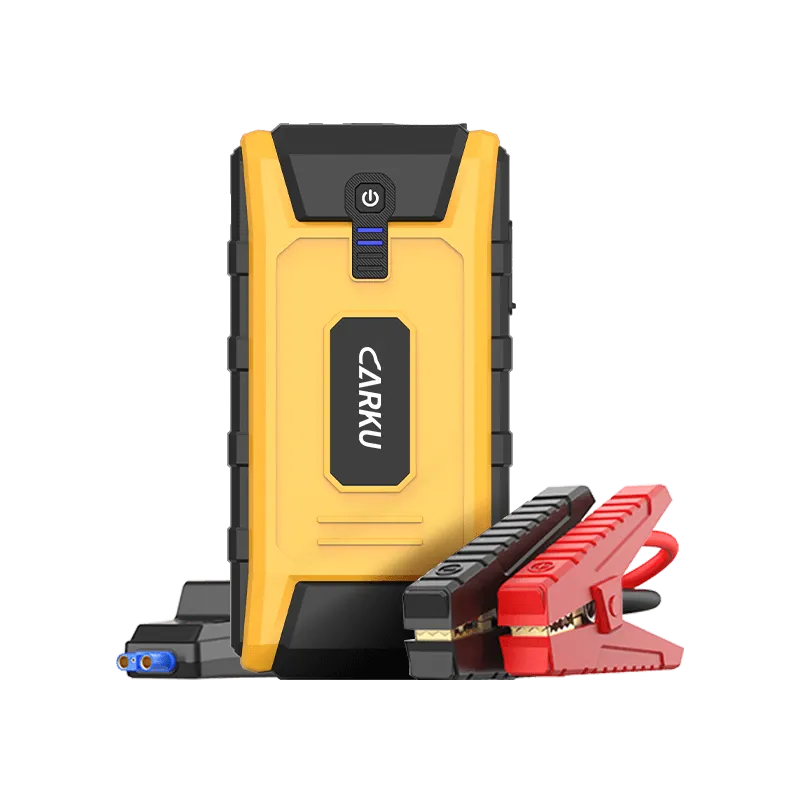
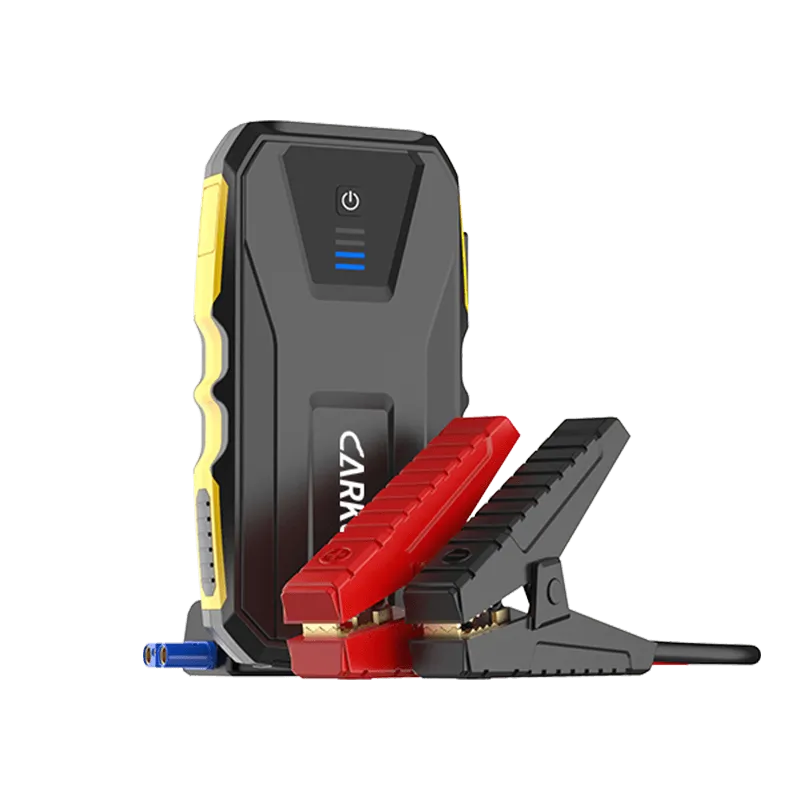
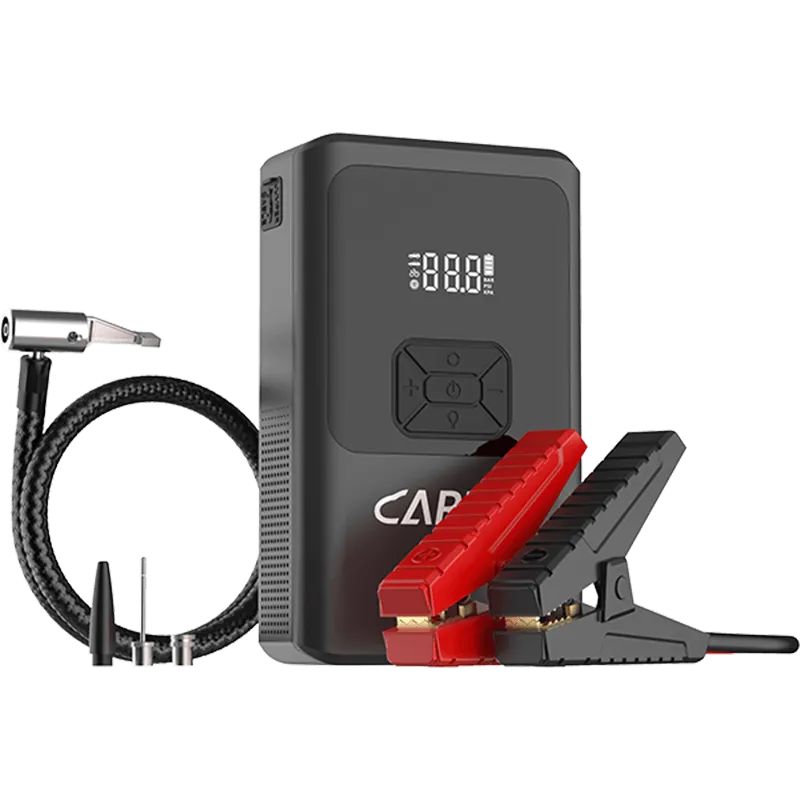
CARKU LiFePO4 jump starter Series: For automotive starting, LiFePO4 Series provides more usable capacity and stronger starting power than lead-acid jump starters—especially in compact designs.
However, it falls short in cold climates or with larger engines: battery resistance increases significantly below freezing, and 300A may not deliver enough sustained power to complete the start.
Is A 500 Amp Jump Starter Good?
A 500 portable jump starter is a good fit for most standard gasoline vehicles used for daily commuting, but may not be ideal for large trucks or diesel engines that require higher peak currents.
For drivers looking for the best jump starter for SUV use, this range covers most standard models without the bulk of higher-rated units. SUVs generally require more power than a typical commuter car but less than full-size trucks or V8-powered vehicles. A portable jump starter also supports everyday needs beyond starting, including charging devices, powering lights, and providing emergency backup during outdoor trips. Fast charging ensures you're never stranded with a dead battery.
Is A 1000 Amp Jump Starter Enough?
At 1000A, a portable jump starter moves beyond personal-use backup into genuine heavy-duty territory—covering large SUVs, diesel trucks, and fleet vehicles. The higher output also compensates for deeply discharged batteries, where lower-rated units often fail to initiate a start at all. For professional settings like repair shops or fleet maintenance, 1000A is the practical minimum.
Overall, if you drive in cold climates or operate vehicles over 3.0L engines, a 1000A jump starter ensures dependable starting power when smaller units fall short.
CARKU Super-Capacitor JS629 (1200A peak): no built-in battery—recharges from the vehicle in minutes, operational even on deeply discharged batteries. Supports 6.0L gasoline / 3.0L diesel.
CARKU Sodium-ion Series: rated –40°C to +80°C operating range, 15 starts per charge on 3.0L gasoline—engineered specifically for extreme-environment reliability.
What To Look For When Buying a Portable Jump Starter?
If your driving involves frequent intercity trips and you worry about battery failure causing delays, you likely drive large cars which include SUVs or heavy-obligation trucks. Regardless of your current battery’s condition, lithium-based jump starters are becoming the mainstream choice for future use, thanks to their waterproof design, ability to handle high temperatures, and reliable discharge performance even in cold climates. With over 3,000 recharge cycles, they’re built for long-term durability.
Key factors to consider include:
1.Engine size
2.Battery condition
3.Weather conditions
4.Jump starter type (portable jump starter vs. jumper cables)
In Conclusion
Peak amps may look impressive, but cold-cranking performance is what really matters. Other factors, such as battery chemistry, internal resistance, and BMS design. They also determine the quality of a good jump starter.
FAQs
Q1: How many amps is a good jump starter for a car?
A1: For most standard cars, 400–800 CA is sufficient to start the engine reliably. Peak amps are higher, but CA represents the practical starting power you need.
Q2: Is a 1000 amp jump starter enough for a diesel truck?
A2: 1000A is typically enough for light diesel. For example, built for drivers who refuse to be stranded, the JS558 delivers 3250A peak current to handle all 12V gasoline engines and diesel engines up to 3.8L.
Q3: What's the difference between peak amps and cold cranking amps?
A3: Peak amps indicate max burst power, while CCA: Current at -18°C for cold starts — usually lower than CA. Prioritize CCA for cold-weather reliability, then CA, and use peak amps as extra reference. Small cars: ~400–600 CCA; trucks/diesel: 800+ CCA.
Q4: Is a 300 amp jump starter good enough?
A4: For small 4-cylinder cars in moderate climates, 300 CA may be enough, but most users prefer 400 CA or more for more reliable starts, especially in colder conditions.






 Jump Starter ODM/OEM Solutions
 Portable Power Station ODM/OEM Solutions
 Starting Battery ODM/OEM Solutions
 ABOUT CARKU
 STRENGTH FACTORY
 THE DEVELOPMENT HISTORY OF CARKU
 CORE COMPETITIVENESS
 COMPANY CULTURE
 QUALIFICATION
 CARKU News
 CARKU Exhibitions
 CARKU Battery Applications