A dead battery always strikes at the worst possible moment — you're already late for work, it's freezing outside, or you're sitting alone in an unfamiliar parking lot. Sound familiar? You're not alone. Every year, millions of American drivers deal with a dead car battery, and it doesn't matter how experienced drivers with CARKU gear in their trunk are always ready to handle it.
The good news: learning the proper way to jump-start a car takes less than ten minutes — and once you know it, you'll have that confidence for life. In 2025, you no longer need to wait for roadside assistance or flag down a stranger. With the right equipment and a clear step-by-step process, you can handle a car with a dead battery entirely on your own.
This guide covers everything you need: how to jump-start a car with jumper cables, how to use a portable lithium jump starter (the CARKU JS-395B), safety rules that protect both you and your vehicle, how to choose the right car service or solution, and the most common questions drivers ask after a successful jump.
Your CARKU Prep Checklist: What This Guide Covers
• The proper way to jump-start a car — traditional cables vs. the CARKU JS-395B, compared directly
• How to use a set of jumper cables safely and correctly
• How to jump-start a car with a portable lithium jump starter (no second vehicle needed)
• Safety rules every driver must follow before touching a dead car
• How to choose between car service options: AAA, local mechanics, or going direct
• FAQ: what to do after a successful jump, battery replacement signs, and more
Method 1: How to Jump-Start a Car with Jumper Cables
Jump-starting a car with jumper cables requires another vehicle with a good battery, but when done right, it's fast, reliable, and gets you back on the road in minutes.
Equipment Checklist
• Another vehicle with a fully charged, good battery
• A set of jumper cables — minimum 4-gauge wire, no longer than 12 feet
• Safety gloves and protective glasses — essential for any jump-start, whether using cables or the JS-395B
• A wire brush to remove corrosion from battery terminals — clean contact points improve charge transfer significantly
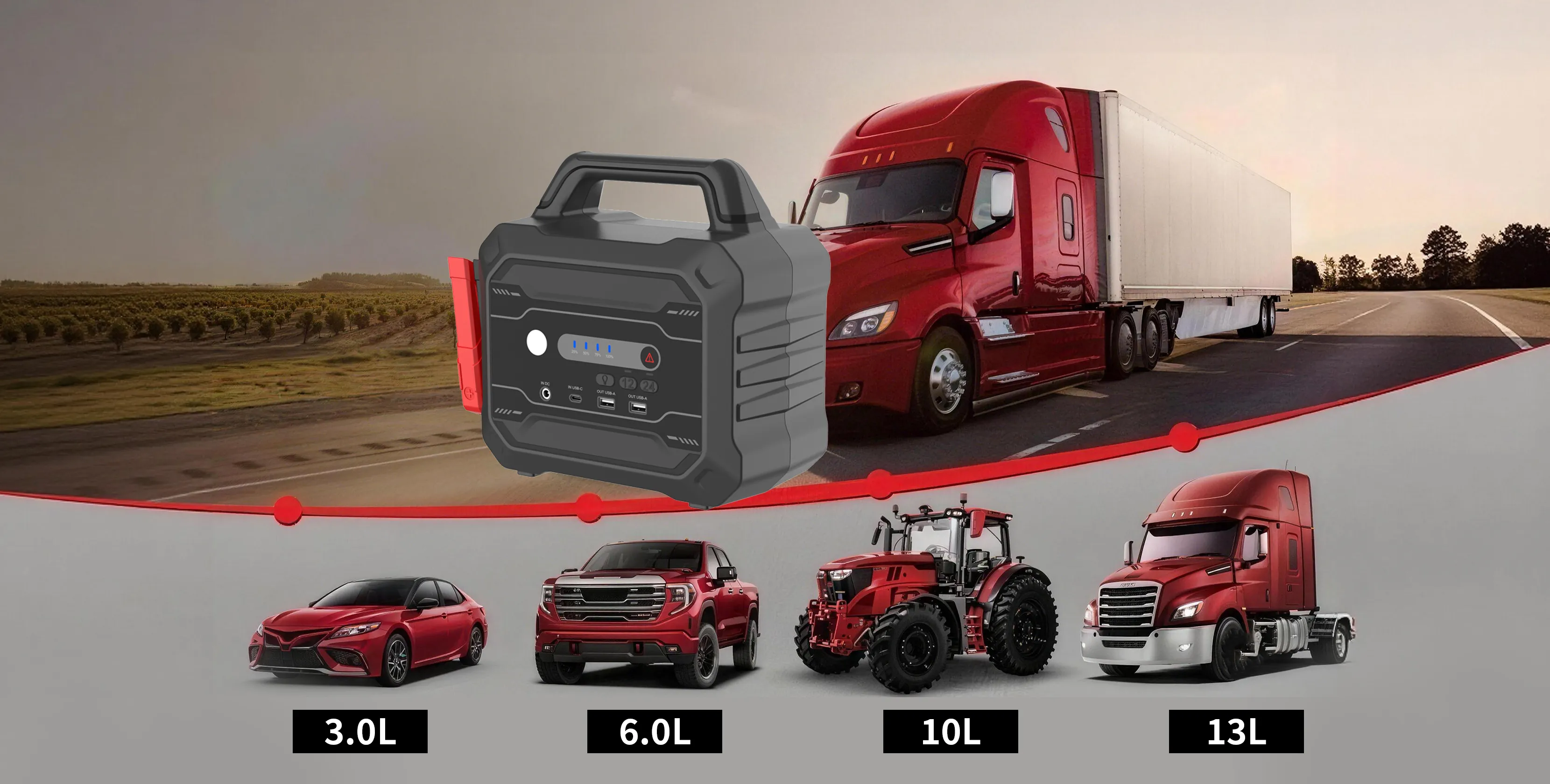
A note on cable gauge: the lower the number, the more power the cable can carry. For most standard gas engines under 3.0L, 6AWG or 4AWG jumper cables are sufficient. For larger engines (4.0L+) or any diesel, go with 2AWG or 1AWG cables. Longer cables also lose power over distance — keep it at 12 feet or under whenever possible.
Step-by-Step: Jump-Starting a Car the Proper Way
1. Park the working vehicle nose-to-nose (or side by side) with the car with the dead battery. Shut down both vehicles completely and set the parking brakes — never attempt a jump-start on a moving or running car.
2. Clean any corrosion from the battery terminals using a wire brush. Good contact at the terminal is essential for a successful jump.
3. Run the red clamp to the positive terminal (+) of the dead battery — this is always your first connection.
4. Secure the other red clamp to the positive terminal (+) of the charged donor battery.
5. Attach the black clamp to the negative terminal (−) of the good battery.
6. Attach the black clamp (the final connection) to an unpainted metal surface on the engine block of the car with the weak battery — not to the battery terminals. Grounding to unpainted metal — not the negative terminal — keeps any residual spark away from battery gases.
7. Start the working vehicle and let it run for two to three minutes to allow the battery in the dead car to build a charge.
8. Attempt to start the previously dead car. If it starts, great — you're moving.
9. Disconnect the cables in reverse order: black clamp from the metal surface, black clamp from the good battery, red clamp from the good battery, red clamp from the (now charged) battery.
10. Drive the jump-started vehicle for at least 20 to 30 minutes to allow the alternator to fully recharge the battery.
Pros & Cons: Jumper Cables
|
Pros
|
Cons
|
|
Low upfront cost — cables last for years
|
Requires another vehicle with a good battery nearby
|
|
Works universally on virtually any vehicle
|
Challenging to use alone, especially at night
|
|
Widely available at any auto parts store
|
Wrong gauge or length reduces success rate
|
|
No charging required between uses
|
Incorrect connection order risks sparks or damage
|
Method 2: How to Jump-Start a Car with a Portable Lithium Jump Starter (CARKU JS-395B)
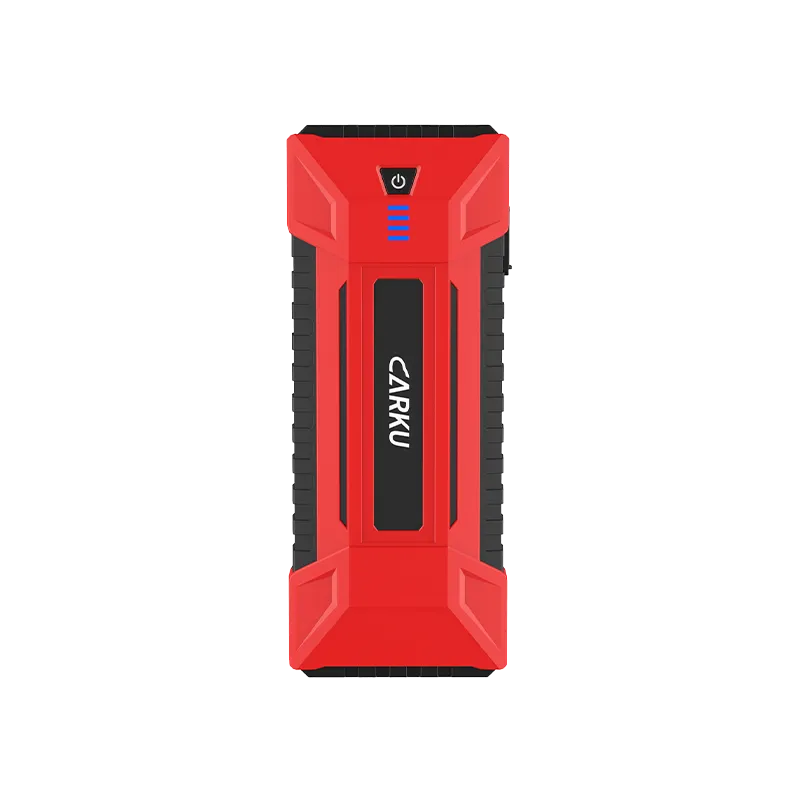
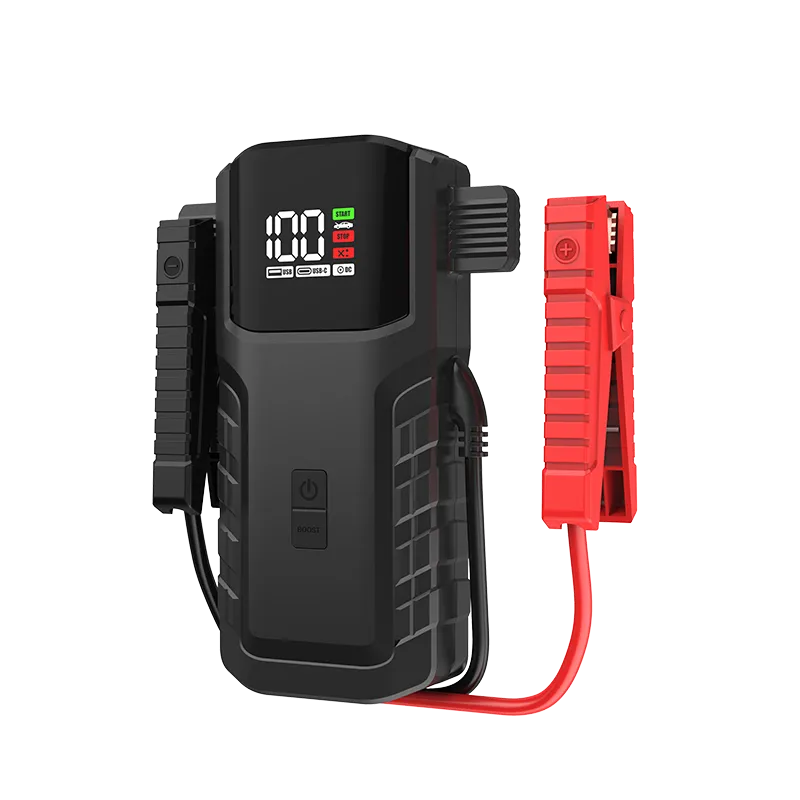
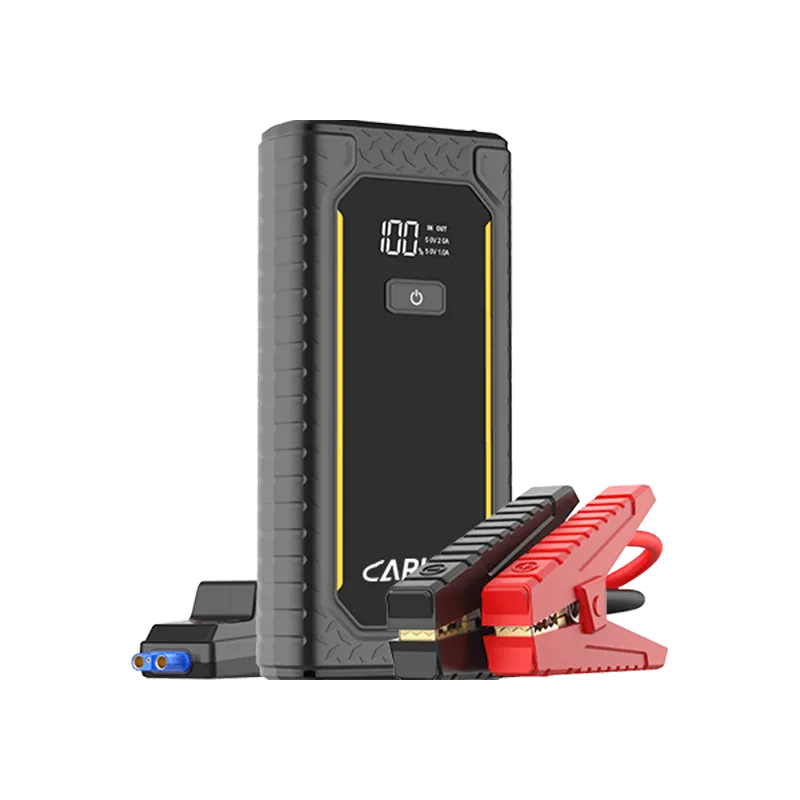
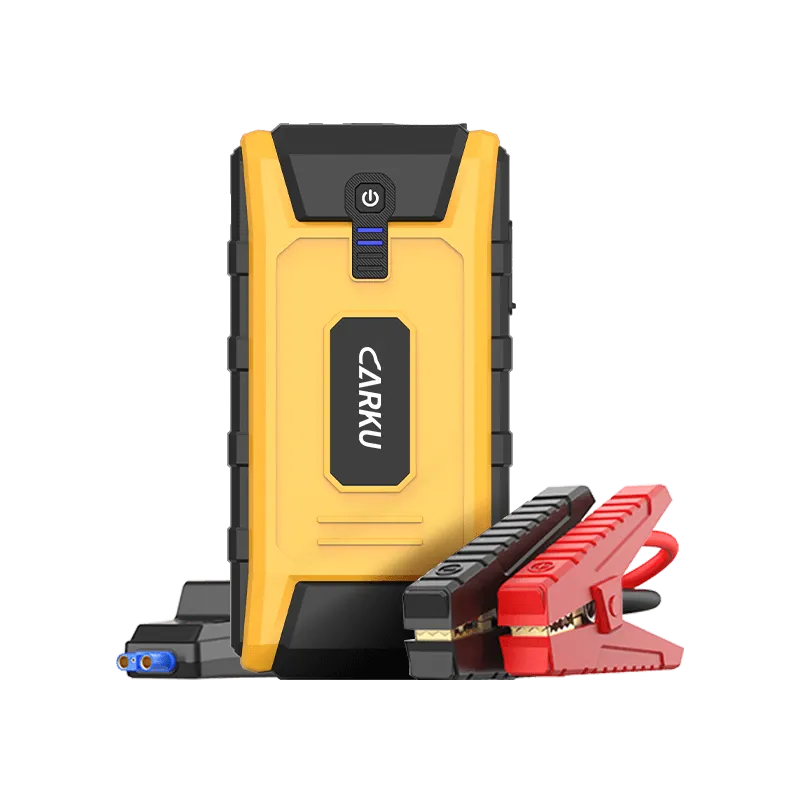
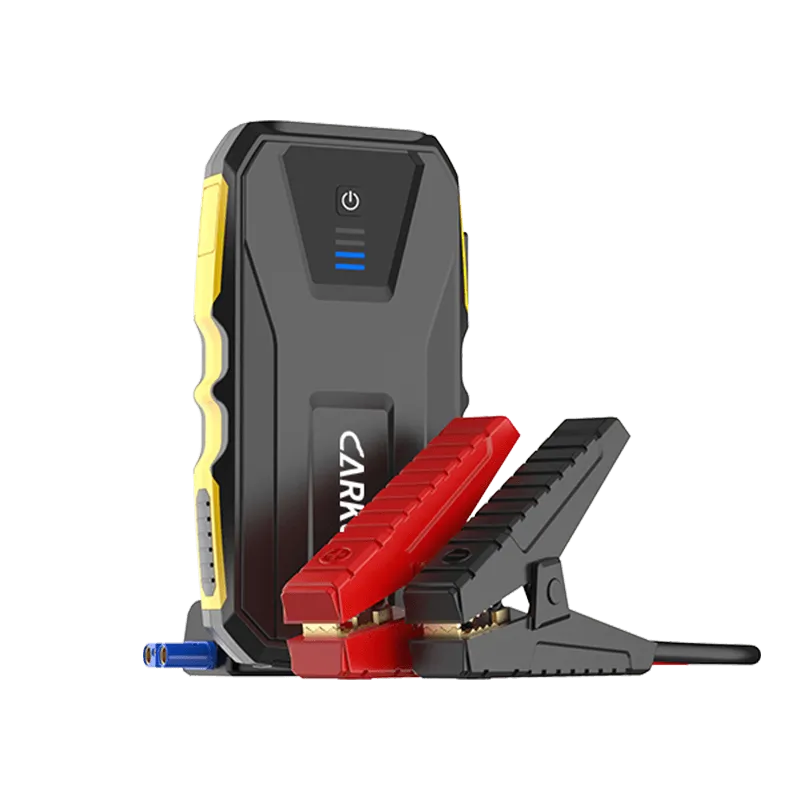
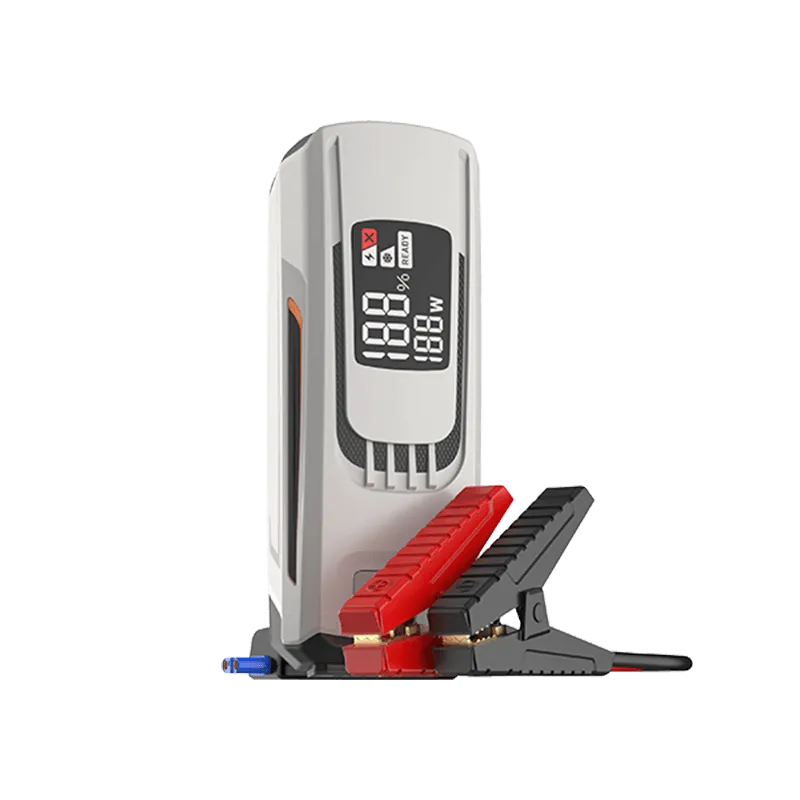
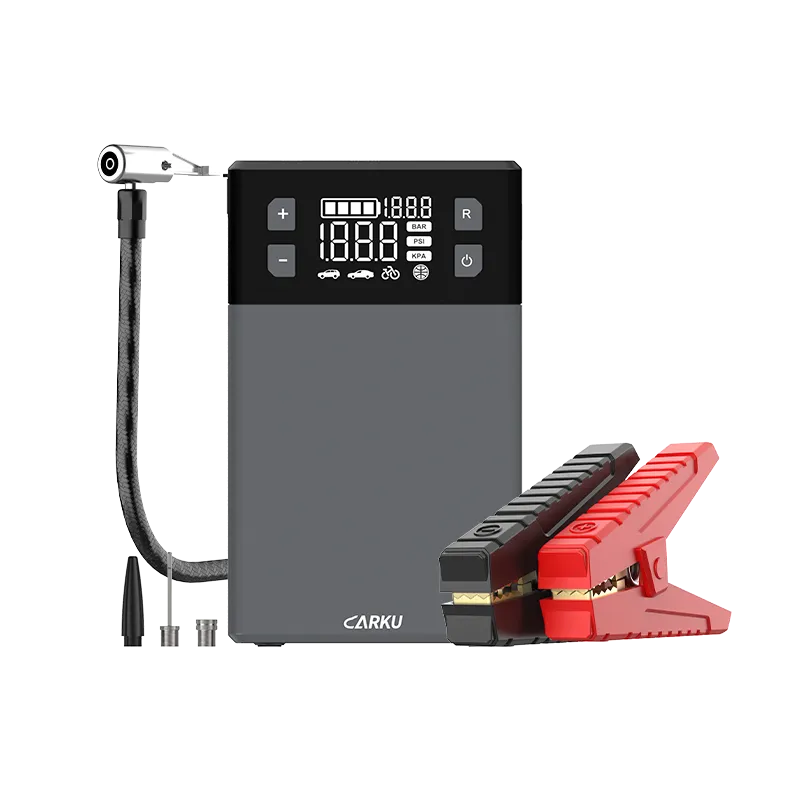
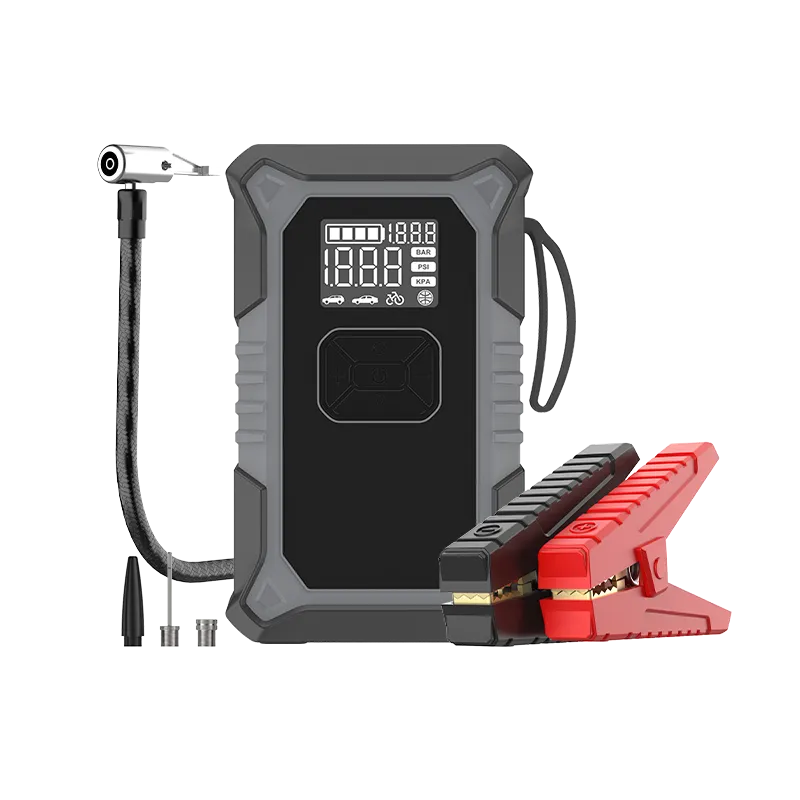
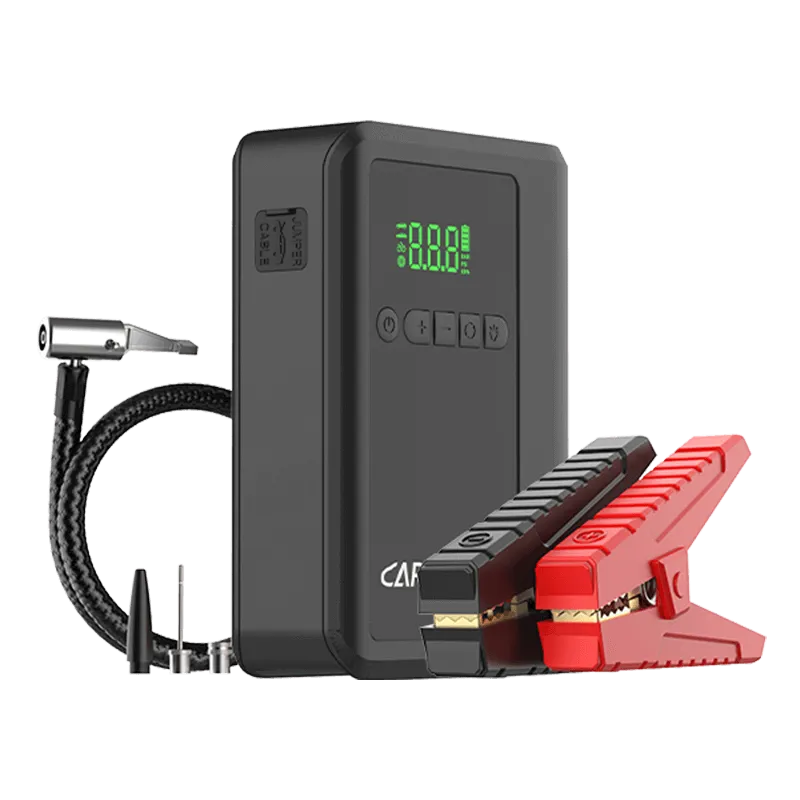
What if there's no another vehicle around — or you simply don't want to depend on one? That's exactly the problem portable lithium jump starters were built to solve. The CARKU JS-395B is a compact, professional-grade unit that fits in your glove box and delivers up to 3,000A of peak current — enough to jump-start the car instantly, even an 8.0L diesel engine at -40°F.
Compared to older lead-acid booster packs, lithium technology is roughly 80% smaller and lighter, holds its charge for months without degrading, and won't develop the sulfation problems that quietly kill lead-acid batteries over time. It also doubles as a USB charger and LED flashlight — genuinely useful between jump starts.
What You Need
• CARKU JS-395B (charged and ready — make this a habit every few months)
• Safety gloves
• Your vehicle's owner manual — the JS-395B works with virtually all 12V gas and diesel vehicles, but always confirm your model’s requirements
Step-by-Step: Jump-Starting a Car Safely with the JS-395B
1. Confirm the JS-395B has sufficient charge. Power off all vehicle electronics and engage the parking brake.
2. Clip the red clamp firmly onto the positive terminal (+) of the dead battery. The JS-395B’s smart clamp design ensures a low-resistance connection the moment you make contact.
3. Attach the black clamp to the negative terminal (−) of the dead battery. Unlike traditional jumper cables, the JS-395B’s built-in reverse-polarity protection makes a direct negative terminal connection the correct and recommended procedure for the JS-395B — a design advantage that standard jumper cables simply cannot offer.
4. Switch on the JS-395B.
5. Engage the ignition. The 60C-rated lithium core delivers instant high-discharge current, making jumpstart possible even in extreme cold.
6. Once the engine starts, power off the JS-395B, then disconnect the clamps in reverse order: black clamp first (from the negative terminal), then the red clamp (from the positive terminal). Store the JS-395B in your vehicle — it recharges via USB-C and holds its charge for months.
7. Let the car idle for several minutes to allow the alternator to begin recharging the car batteries. For a fuller recharge, drive for 20 to 30 minutes or connect a battery charger overnight.
Pros & Cons: Lithium Portable Jump Starter
|
Pros
|
Cons
|
|
No second vehicle needed — fully self-contained
|
Higher upfront cost than basic jumper cables
|
|
Compact enough to store in a glove box or go-bag
|
Must be kept charged to be useful
|
|
Stable performance in extreme cold (-40°F)
|
Slight capacity loss in sustained sub-zero conditions (still outperforms lead-acid)
|
|
Low self-discharge — stays ready for months
|
|
|
Multi-function: USB charging, LED flashlight, 12V output
|
|
Safety First: What to Do Before You Touch the Battery
Following the proper safety steps before jump-starting a car safely protects you, your vehicle, and anyone nearby. Modern car batteries can release hydrogen gas when failing, and a single wrong connection can arc, ignite, or send acid splashing. Take two minutes to do this right.
• Wear gloves and safety glasses — protect against acid, arcs, and unexpected sparks
• Stay to the side of the battery, never lean directly over it
• Avoid puddles, wet pavement, or heavy rain — water and electricity don't mix
• Never attempt a jump-start on a cracked, frozen, or visibly leaking battery
• Always connect and disconnect in the correct clamp order — red first on, black last off
• Keep the vehicles stationary with engines off (except when directed) and brakes engaged
How to Choose the Right Jump Starter Solution
Not every dead battery situation is the same — and neither is every solution. Here's how to CARKU helps you match the right solution to your situation.
1. AAA / Mobile Services vs. Local Mechanics vs. Manufacturer-Direct
• AAA / Roadside Assistance: Good for a one-time emergency call, but wait times vary, especially in bad weather or rural areas. Car service on demand comes with a premium.
• Local Mechanics: Convenient for nearby battery replacement or diagnosis, but may not carry professional-grade jump starter equipment.
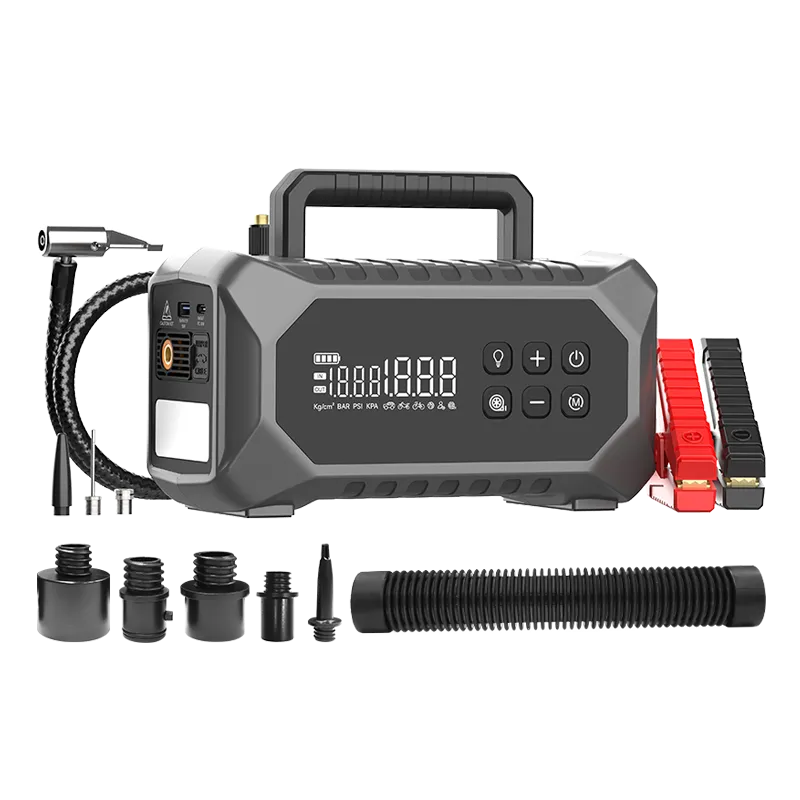
• Manufacturer-Direct (CARKU): Best for fleet accounts, large-scale procurement, or businesses that want to launch branded jump starters with full OEM/ODM support.
2. Emergency Response vs. Proactive Preparedness
• Reactive (calling for help): Expensive per incident, unpredictable wait times, no control over outcome.
• Proactive (owning the right tool): A quality portable jump starter pays for itself after one use — and it's there at 2 a.m. when no car service is available.
3. Off-the-Shelf vs. Custom / OEM
• Standard retail jump starters are affordable and work fine for personal use.
• OEM/ODM solutions from CARKU offer brand customization, spec flexibility, and long-term value for distributors, fleet operators, and product brands ready to stake a position in the portable power and automotive safety market.
FAQ: Common Questions After a Jump-Start
Q1:Does reviving the engine help after a jump-start?
A1:Marginally. When the engine runs faster, the alternator spins faster and produces more electricity, which helps recharge the car batteries more quickly. That said, the most effective approach is to drive the vehicle for 20 to 30 minutes to allow the battery to reach a meaningful charge level — or better yet, connect a battery charger to fully restore it overnight.
Q2:What if the car won't start after multiple attempts?
A2:If jump-starting a car fails repeatedly, the issue likely isn't just a dead battery. A worn alternator, a failing starter motor, or a battery that's past the point of recovery may be the real culprit. At that point, battery replacement or a professional diagnosis is the right next step.
Q3:How do I know if I need a new battery vs. just a jump?
A3:If your car with a dead battery jump-starts fine but dies again within a day or two — especially if the alternator checks out — the battery itself has likely reached the end of its life. Most car batteries last 3 to 5 years. A new battery is the right fix when jump-starting becomes a recurring need.
Q4:Is the CARKU JS-395B safe in extreme cold?
A4:Yes. Its 60C-rated lithium core is specifically engineered for cold-climate performance, remaining reliable down to -40°F. Lead-acid alternatives lose significant capacity in freezing temperatures, making the JS-395B a smarter choice for drivers in the northern U.S. and Canada.
Q5:How long should I wait a few minutes — or longer — before trying to start the car?
A5:After connecting the jumper cables or portable jump starter, wait a few minutes (two to three) with the working vehicle or device running before attempting to start the car with the weak battery. This gives the dead battery time to accept an initial charge and improves first-attempt success rates.
Final Recommendation: Stop Depending on Luck
A dead car battery is an inconvenience, not an emergency — if you're prepared. The proper way to jump-start a car is a skill every driver should have, and the right tool makes the difference between a five-minute fix and a two-hour ordeal waiting for a car service truck.
For everyday personal use: Keep a CARKU JS-395B in your vehicle. It's compact, always ready, and eliminates the need for another vehicle entirely. One successful jump pays for the unit.
For high-displacement or diesel engines: Use 2AWG or 1AWG jumper cables or a jump starter rated at 2,000A peak or above. Underpowered equipment won't get the job done.
For fleet operators and businesses: Contact CARKU directly to explore bulk purchasing and OEM/ODM options. Battery replacement programs and branded jump starter solutions are available for commercial accounts.
After every jump-start: Recharge your car batteries fully using a quality battery charger — ideally one with a conditioning or desulfation mode to restore capacity lost during a deep discharge.
Don't wait until you're stranded to figure this out. Learn the proper way to jump-start a car today, get the right equipment, and drive with confidence knowing you're covered — no matter what the battery does next.
You Might Also Like:
How to jump start your car battery the right way Carku’s professional experts have tested





 Jump Starter ODM/OEM Solutions
 Portable Power Station ODM/OEM Solutions
 Starting Battery ODM/OEM Solutions
 ABOUT CARKU
 STRENGTH FACTORY
 THE DEVELOPMENT HISTORY OF CARKU
 CORE COMPETITIVENESS
 COMPANY CULTURE
 QUALIFICATION
 CARKU News
 CARKU Exhibitions
 CARKU Battery Applications