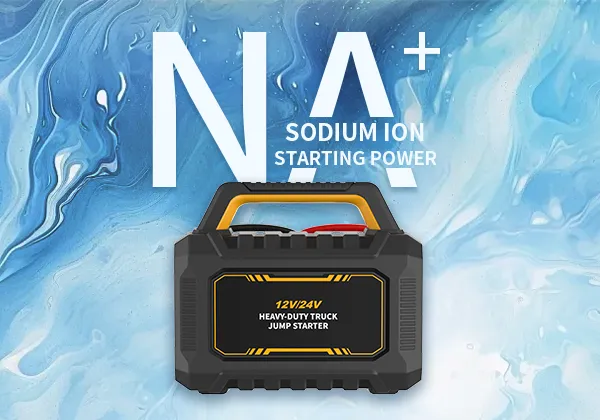
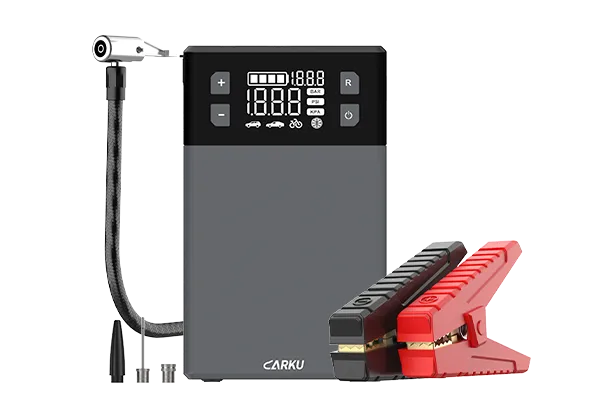
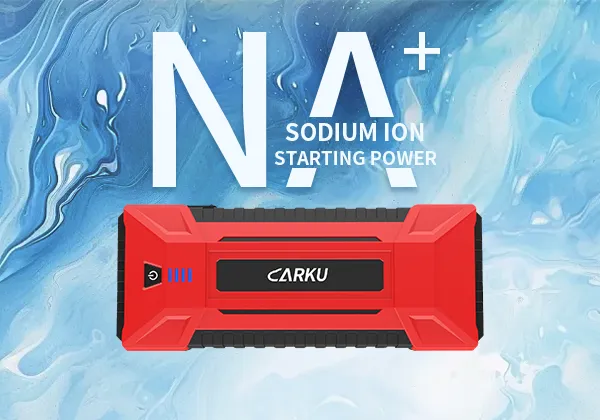
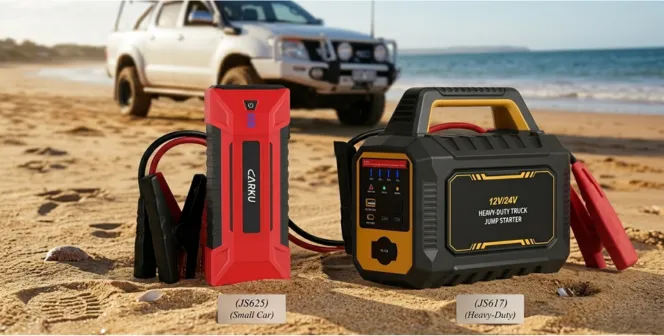
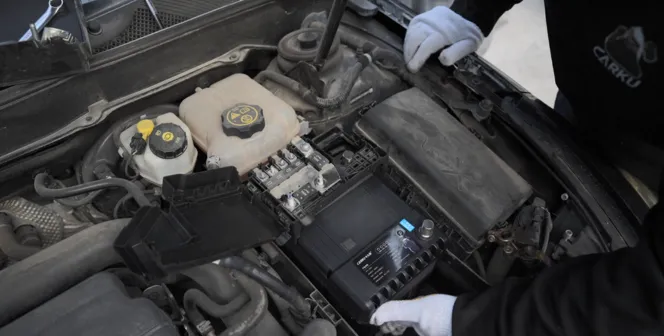
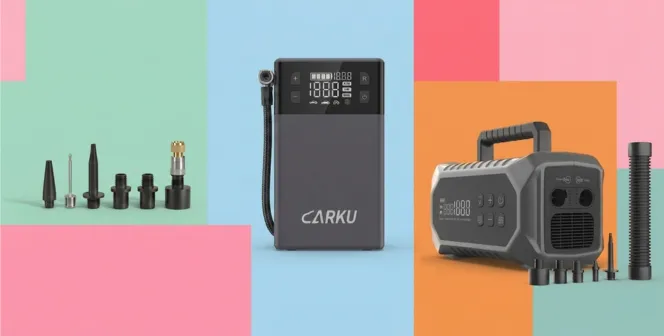
The best portable jump starter for diesel trucks is one that matches your engine size, battery system voltage, and cold-weather starting needs. In regions with harsh winters—such as Canada, Alaska, Northern Europe, and Russia—diesel engines often require significantly higher cranking power during cold starts. For light-duty diesel pickups, a compact 12V unit may be enough. For medium-duty and heavy-duty diesel trucks, you need a higher-output jump starter with stable current delivery, strong safety protection, and support for repeated cranking attempts.
Why Diesel Trucks Need More Starting Power
Diesel engines operate with much higher compression ratios than gasoline engines, which means the starter motor must deliver significantly more cranking power to turn the engine. When a diesel truck battery dies, it often results in a complete shutdown rather than a weak start attempt. The challenge becomes even greater in cold conditions common in regions such as Minnesota, North Dakota, Siberia, and Scandinavia, where low temperatures and thicker engine oil increase the resistance during startup. This is why not every car jump starter works on a diesel truck. To reliably restart a diesel engine, you need a portable jump starter capable of delivering higher peak current and stable power for high-compression cold starts.
How to Choose the Best Portable Diesel Jump Starter
Not all jump starters are built the same, especially when it comes to diesel trucks. After getting burned by weak units that barely click when you need them most, here are the make-or-break features that actually matter.
Peak Amps / Starting Power
Diesel engines run at much higher compression ratios than gasoline engines, so they require significantly more cranking power to start. Peak amps indicate whether a jump starter can actually turn over a diesel engine or simply power the electronics. For smaller diesel pickups, a unit rated around 1000 peak amps may be sufficient. Medium- and heavy-duty diesel trucks often require 1500–3000 peak amps to deliver reliable starting power, especially when the battery is completely dead.
Battery Capacity and Repeated Starts
Capacity determines how many starting attempts the jump starter can support before needing a recharge. Diesel engines sometimes require multiple cranking attempts, particularly after long parking periods or in cold weather. High-capacity lithium jump starters maintain more stable voltage during repeated starts, reducing the risk of the unit cutting off before the engine fires.
12V vs 24V Compatibility
Many diesel vehicles operate on 12V systems, but medium-duty trucks, heavy equipment, and some commercial vehicles use 24V electrical systems or dual-battery setups. A standard 12V jump starter may not work for these vehicles. If you operate larger trucks or fleet vehicles, choose a jump starter designed for 24V compatibility or dual-battery diesel systems to ensure proper starting support.
Cold-Weather Performance
Cold temperatures increase engine oil viscosity and reduce battery efficiency, which significantly raises the power required for diesel starting. In winter conditions, a jump starter must deliver stable current output even when temperatures drop. Units using advanced lithium battery chemistry, such as LiFePO4, typically provide better stability and longer cycle life compared with traditional lithium-ion designs when exposed to repeated cold-start conditions.
Safety Features and Clamp Design
High-power diesel jump starting involves large current flow, so safety systems are essential. Look for jump starters that include reverse-polarity protection, spark-proof technology, and short-circuit protection. Quality clamp design also matters: heavy-duty insulated clamps with strong contact pressure help maintain stable current flow during high-amperage diesel starts.
Top Picks: Best Portable Jump Starters for Diesel Trucks 2025
Different diesel engines require very different levels of cranking power. Choosing the wrong portable jump starter can mean either paying for more power than you need or ending up stranded with a unit that cannot turn over the engine. The following recommendations are organized by engine size and real-world diesel starting requirements.
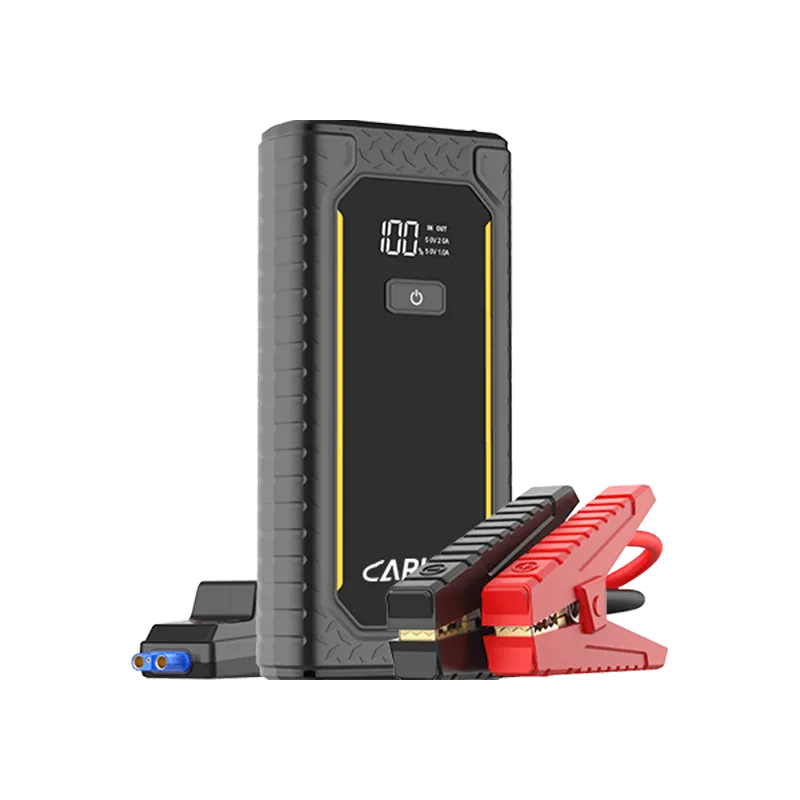
Heavy-Duty Diesel Jump Starter: CARKU JS-396
Best for who
Fleet operators, semi-truck drivers, heavy equipment operators, and commercial vehicles with very large diesel engines.
Engine size supported
13L–15L diesel engines and larger.
Voltage
12V heavy-duty diesel systems.
Peak amps
8000 peak amps.
Why it stands out
Designed specifically for large-displacement diesel engines used in commercial trucks and industrial vehicles. The high-output lithium battery system provides strong cranking power even in extreme cold, while 36-inch heavy-duty cables improve connection reliability during high-current starts.
Limitations / use scenario
At about 29.8 lb, it is heavier than typical portable jump starters. Best suited for service trucks, workshops, fleet garages, or vehicles that require maximum starting power rather than everyday carry.
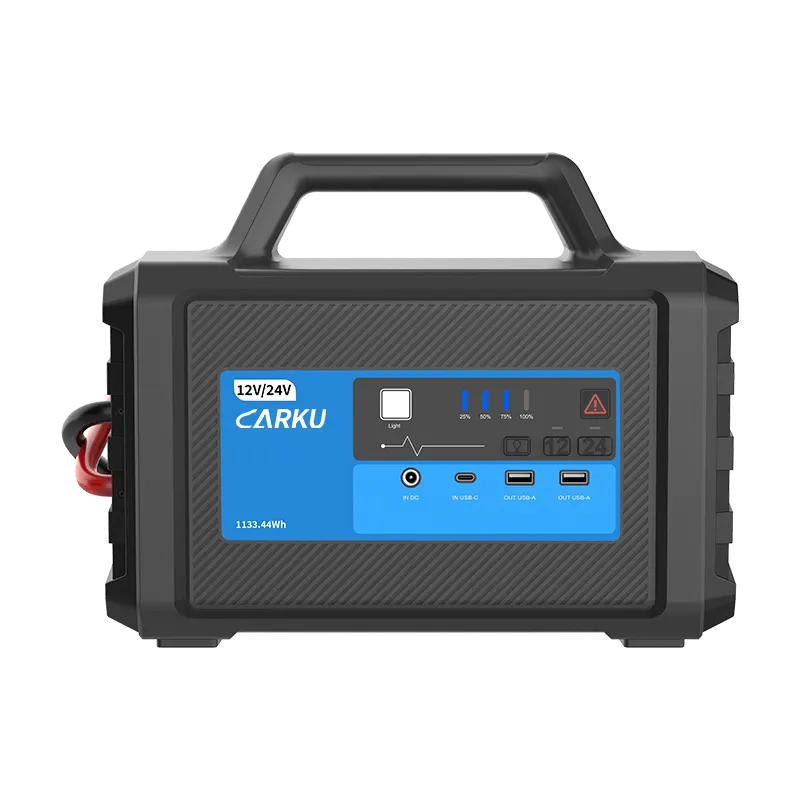
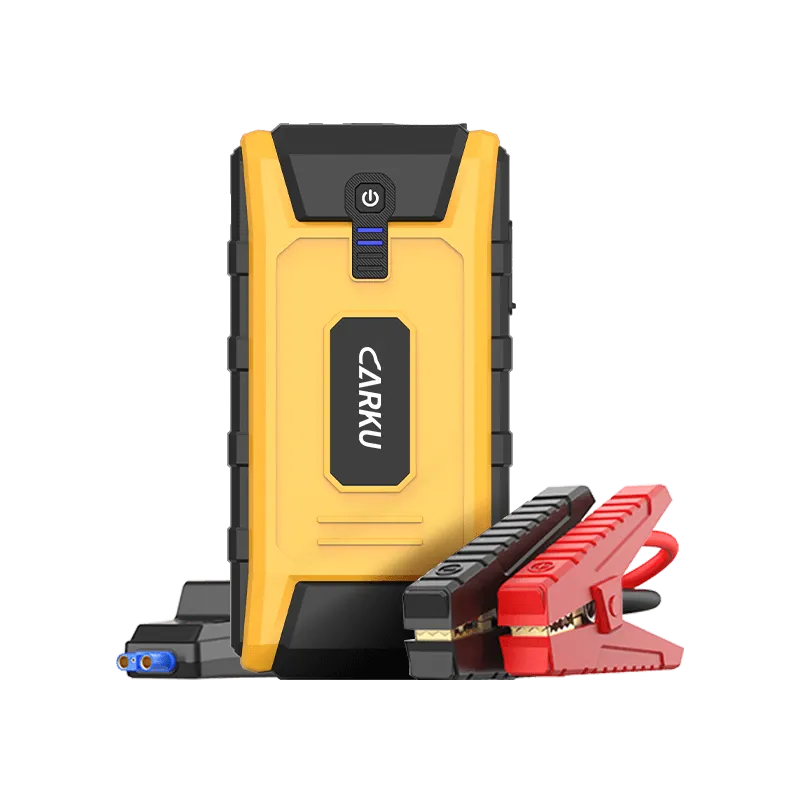
Medium-Duty Diesel Jump Starter: JS-326B
Best for who
Box trucks, delivery vehicles, utility trucks, and medium-duty diesel work vehicles.
Engine size supported
7.0L–10.0L diesel engines.
Voltage
12V diesel starting systems.
Peak amps
High-output configuration designed for repeated cranking cycles.
Why it stands out
Built to support longer glow-plug cycles and repeated start attempts, which are common in medium-duty trucks after extended downtime. Its lithium battery chemistry allows operation in temperatures from −40°C to 60°C, making it suitable for demanding work environments.
Limitations / use scenario
Primarily designed for commercial vehicles and work trucks, so it may be more power than necessary for smaller pickup trucks.
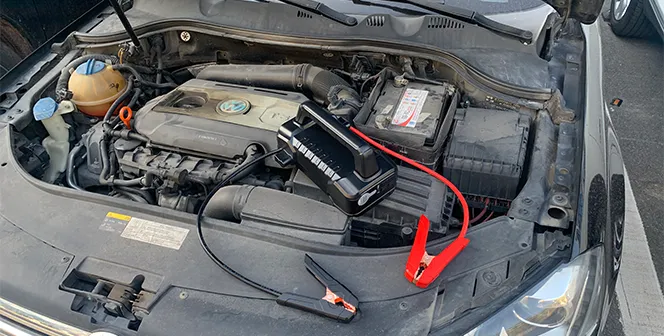
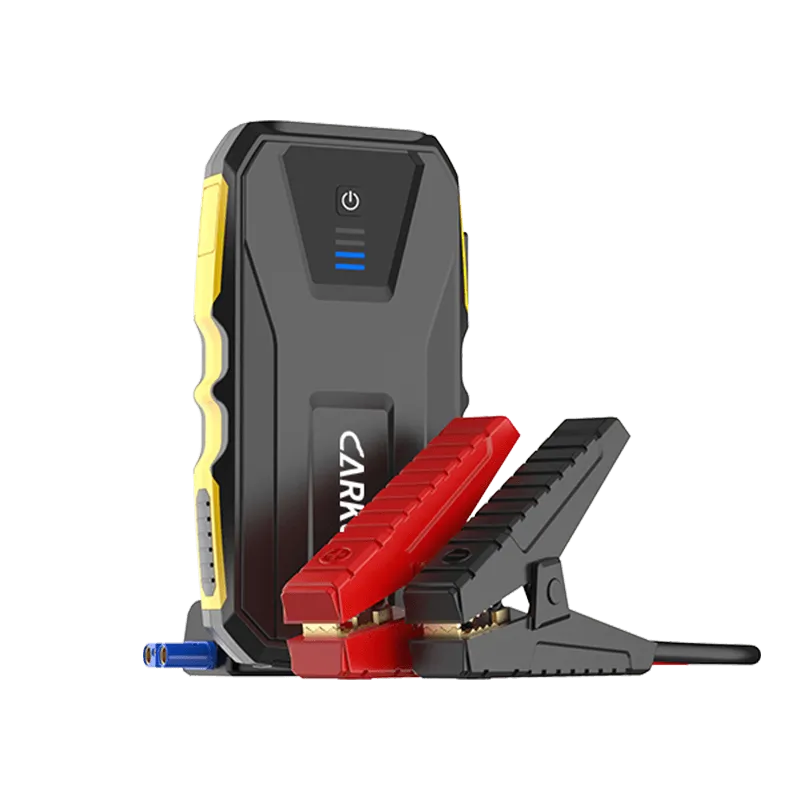
Light-Duty Diesel Jump Starter: CARKU JS-78F
Best for who
Diesel pickup owners, service vans, and small commercial vehicles that need a compact emergency starter.
Engine size supported
Up to about 5.0L diesel engines (typical range 3.0L–6.0L class vehicles).
Voltage
12V vehicle systems.
Peak amps
2300 peak amps.
Why it stands out
Combines high peak current with a lightweight design. The lithium iron battery technology delivers 102.4 Wh capacity, allowing multiple jump attempts while keeping the unit portable enough to store behind the seat or in a toolbox.
Limitations / use scenario
Best suited for light-duty diesel pickups and small commercial vehicles. It may not provide enough cranking power for large commercial diesel engines.
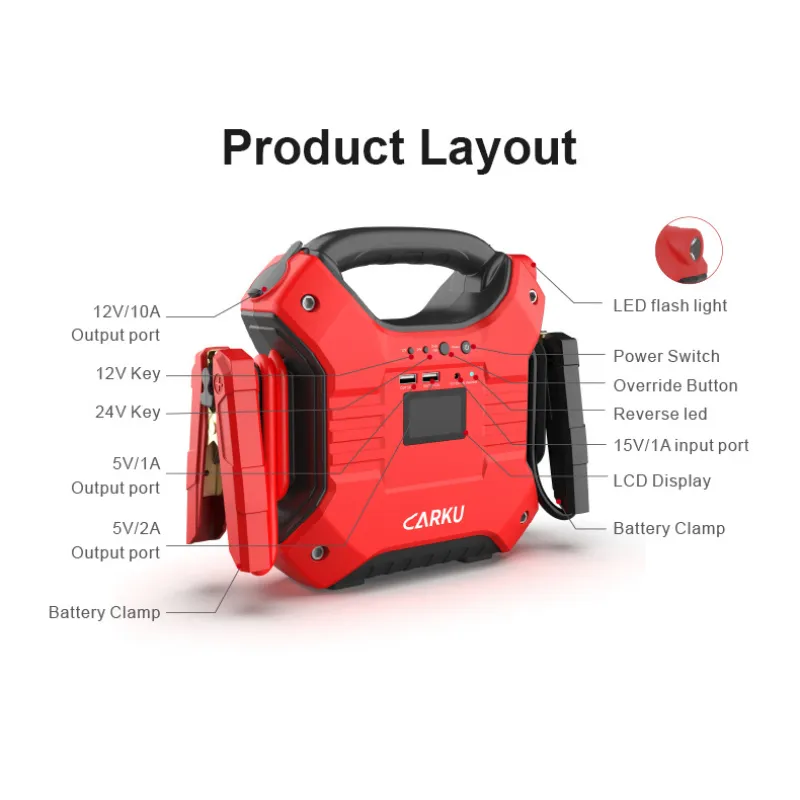
12V vs 24V Diesel Truck Jump Starting Guide
Many diesel trucks are equipped with dual battery systems. Some are connected in parallel to maintain 12V, while others are connected in series to output 24V. Should both batteries be connected, or just one?
Can You Use a Portable Jump Starter on a Dual-Battery Diesel Truck?
A portable jump starter can be used on most dual-battery diesel trucks, but the correct connection depends on how the batteries are configured. Many diesel trucks use either 12V parallel systems or 24V series systems, and identifying the system type is the first step before jump-starting.
12V Parallel Dual-Battery System
This setup is widely used in diesel pickups and light-duty trucks. The positive terminals of both batteries are connected together, and the negative terminals are also connected together, which still outputs 12 volts. In this case, a 12V portable jump starter can usually be connected to either battery or directly to the main battery terminals.
24V Series Dual-Battery System
Heavy-duty trucks and semi-trucks often use a 24V electrical system, where the positive terminal of one battery connects to the negative terminal of the other, creating a 24-volt output. For these vehicles, a 24V-compatible jump starter or a heavy-duty 12V/24V jump starter is required to provide enough starting power safely.
The key rule is simple: always match the jump starter voltage with the vehicle’s electrical system to avoid damaging the batteries or onboard electronics.
How to Safely Jump Start a 12V or 24V Diesel Truck
Once you confirm the vehicle’s voltage and battery configuration, follow these steps to safely start the engine.
Step 1: Turn Off All Electrical Loads
Switch off the ignition, lights, air conditioning, and other electrical accessories to reduce power draw during the starting process.
Step 2: Connect the Positive Clamp
Attach the red clamp to the main positive terminal of the battery bank.
Step 3: Connect the Negative Clamp
Attach the black clamp to the main negative terminal or to a solid chassis ground point on the truck.
Step 4: Check Jump Starter Status
Make sure the jump starter indicator or display shows the unit is ready to deliver power.
Step 5: Start the Diesel Engine
Turn the ignition key or press the start button. If the truck uses glow plugs, allow the normal preheat cycle before cranking the engine.
Step 6: Remove the Clamps in the Correct Order
After the engine starts successfully, remove the black clamp first, then remove the red clamp.
Step 7: Let the Engine Run
Allow the truck to run for 15–20 minutes so the alternator can recharge the battery.
Important:
For parallel battery systems, the clamps can connect to either battery's terminals.
For series battery systems, always connect to the main positive and main negative terminals of the battery bank to ensure proper voltage matching and safe starting.
Frequently Asked Questions
1. How Many Amps Are Needed to Start a Diesel Truck?
Most pickup trucks and light-duty diesel vehicles require 1500-2500 CCA to start reliably. Jump starters for these applications typically provide between 2000 and 3000 peak amps to ensure sufficient starting power.
2. How Long Does a Portable Jump Starter Last?
On a single charge, a typical lithium-ion jump starter can usually hold its power for 3–6 months, while units with LiFePO₄ battery cells can hold their charge for 6–12 months, keeping them ready for emergencies. The overall battery life also depends on factors such as storage temperature, charging habits, and general maintenance.
3.What size jump starter do I need for a diesel truck?
For smaller diesel pickups with engines around 3.0L–5.0L, a portable jump starter rated at 1000–2000 peak amps is usually enough. Medium-duty trucks with 6.0L–10.0L engines typically need 2000–4000 peak amps to crank reliably. Large commercial diesel engines may require 5000 amps or more, especially if the battery is completely dead.
4.Can a portable jump starter start a 24V diesel truck?
Many portable jump starters are designed for 12V vehicles only, which works for most cars and light-duty diesel pickups. However, larger trucks and heavy equipment often use 24V electrical systems with two batteries connected in series. In that case, you need a 12V&24V-compatible jump starter or a heavy-duty model designed for commercial trucks.
5.Are lithium jump starters safe for diesel trucks?
Most lithium jump starters include built-in protections such as reverse polarity protection, short-circuit protection, and overcurrent protection. These safety systems help prevent damage if the clamps are connected incorrectly.Lithium-based jump starters are also popular because they are lighter and more compact than traditional lead-acid units.




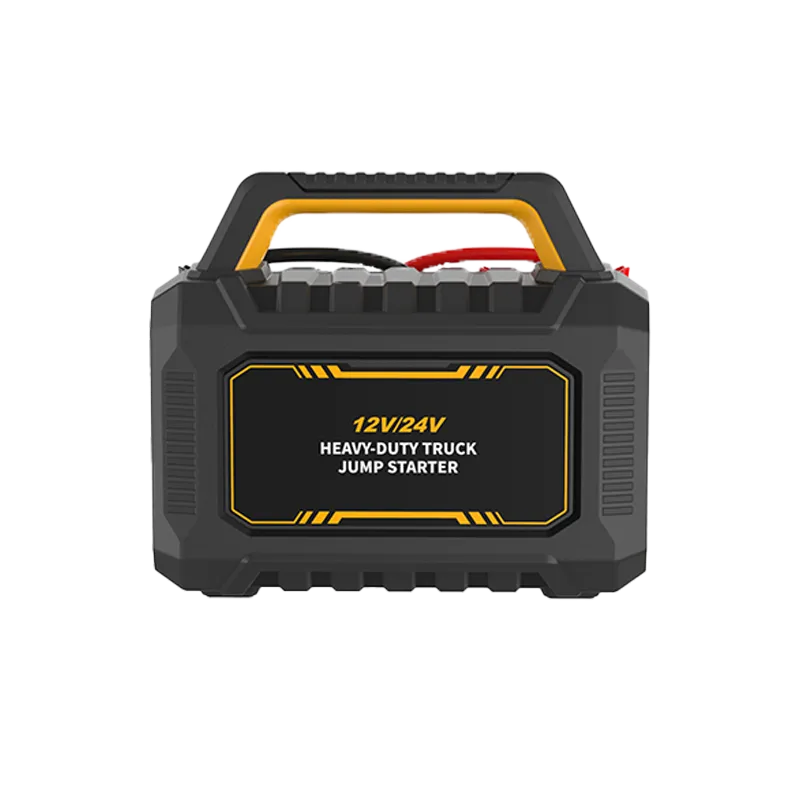
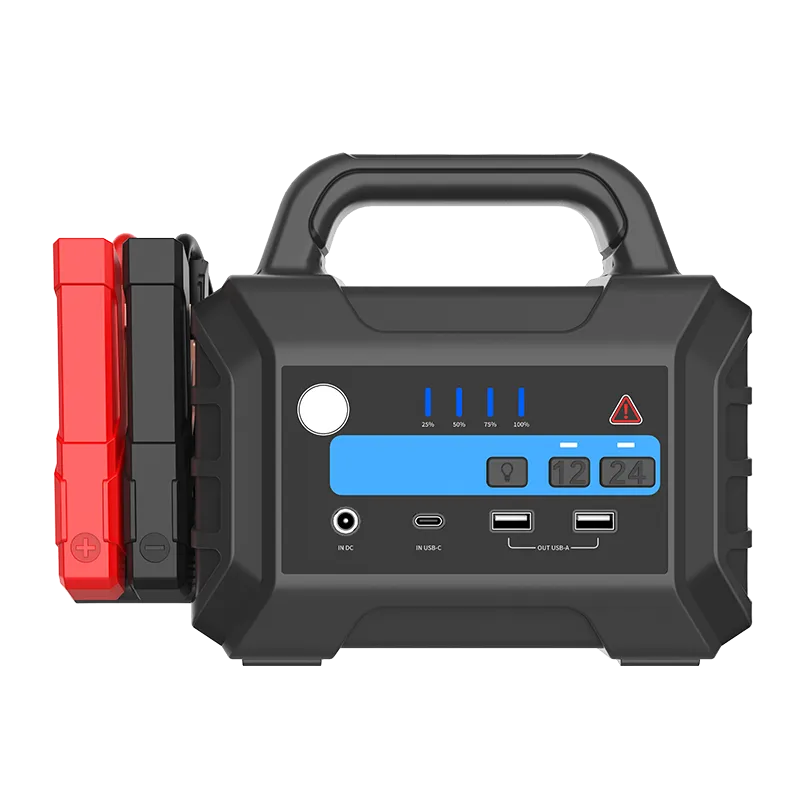
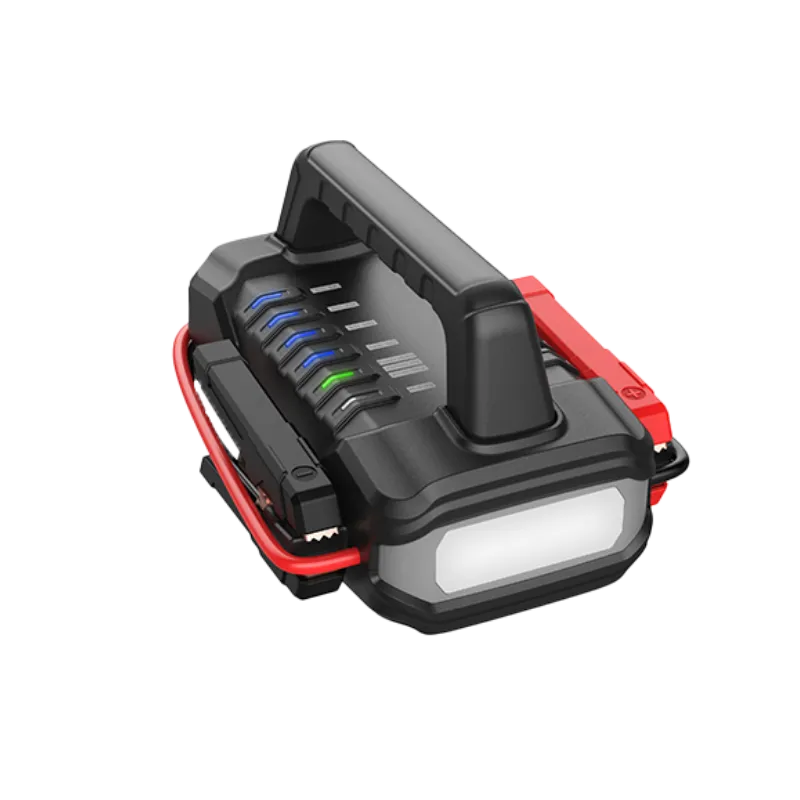

 Jump Starter ODM/OEM Solutions
 Portable Power Station ODM/OEM Solutions
 Starting Battery ODM/OEM Solutions
 ABOUT CARKU
 STRENGTH FACTORY
 THE DEVELOPMENT HISTORY OF CARKU
 CORE COMPETITIVENESS
 COMPANY CULTURE
 QUALIFICATION
 CARKU News
 CARKU Exhibitions
 CARKU Battery Applications